FESTIVALS are part of the indigenous lifestyle in Papua New Guinea.
Everywhere you go you find celebration of feasts or festivals most of which have now become annual events turning into tourism attractions for the country.
The Mona canoe race in the Autonomous Region of Bougainville is one such event that is hosted annually together with other activities. In 2014, Bougainville for the first time set dates for Bougainville festivals including the Mona that was held throughout the region starting the same year.
 |
| Some familiar faces from Kuhilin Cultural Group readying to perform at Mona Festival, Buka ARoB this afternoon 28/08/14 |
It was first held from Aug 28 to 30, 2014 at the Buka Showground.
Bougainville’s bi-annual Reed Festival is another cultural event for people to show their culture, beauty and diversity over several days through dancing, songs, plays, drama and other traditional and creative arts.
Bougainville’s bi-annual Reed Festival is another cultural event for people to show their culture, beauty and diversity over several days through dancing, songs, plays, drama and other traditional and creative arts.
The Reed Festival is staged in Arawa and performers come from all over Bougainville.
The festival provides the opportunity for young Bougainvilleans to learn about and partake in their own culture from the older generation.
One important part of the Reed Festival is the ‘Cool Culture’ component that incorporates cultural activities and displays by the local children.
Its sister event, the Mona Festival is held annually in Buka town to celebrate the seafaring tradition of Bougainvilleans.
 |
| Mona Festival, Buka. |
It is staged in August every year and attracts cultural performers from all over the region.
The Mona Festival is sometimes referred to as the Canoe Festival.
The name Mona actually refers to a large canoe which was used in the past for the purpose of trade or to conduct lightning raids on other communities and islands in the Solomon Sea.
The Mona is not a ‘dugout’ canoe made out of hollowing out the trunks of large trees.
Instead, the canoe is crafted out of hewn planks (using stone tools) of hard lightwood, expertly held together using special vines.
The Mona was made water tight using the sap from the seeds of a certain tree. The canoes could hold up to 10 rowers and move swiftly over water.
The Buka township is usually given a rare treat with the hosting of the annual Mona Festival.
Festival committee chairman and tour operator Lawrence Belleh anticipates a good number of tourists to visit the region during the festival period each year.
“The popular Kuri Resort is fully booked throughout the festival period,” he said.
“We’ve had calls from as far as the United States of America for accommodation. Other guest house operators are also taking in bookings for that period,” Belleh said.
In 2014 when the festival was first hosted, it attracted 18 groups from South, Central and North Bougainville.
 |
| Mona Festival is Alive n well, Buka town. Kuhilin Cultural Group, Hagogohe Constituency getting ready to perform |
Belleh explained that the festival aimed to unify all Bougainvilleans as part of the restoration exercise towards peace building and return to normalcy after the civil war on the island.
“It also aims to promote Bougainville as a preferred tourism destination,” he said.
The Mona is a Bougainville traditional canoe which carries the pride of Buka people as it was used by their ancestors as a sea transport means. It comes in three types – for wars, long voyages and fishing.
The Mona is a Bougainville traditional canoe which carries the pride of Buka people as it was used by their ancestors as a sea transport means. It comes in three types – for wars, long voyages and fishing.
Belleh acknowledged Lae Biscuit Company for its cash and kind donation to the value of K15,000. Digicel PNG has undertaken to be the major sponsor acquiring naming rights.
The last festival started from Malasang Village with a welcome and tradition rituals performed by the village chiefs.
A voyage was then taken to Ieta Village then to Sohano Island before heading to Buka township.
Together with the festivals, the beauty of black-skinned people from the Autonomous Region of Bougainville is also an attraction itself.
Apart from some African black people and other Solomon Islanders, Bougainville is said to have the blackest people on planet earth.
Black is a unique skin colour and often when photographs are taken the camera lens makes it appear that these people are ‘too black’.
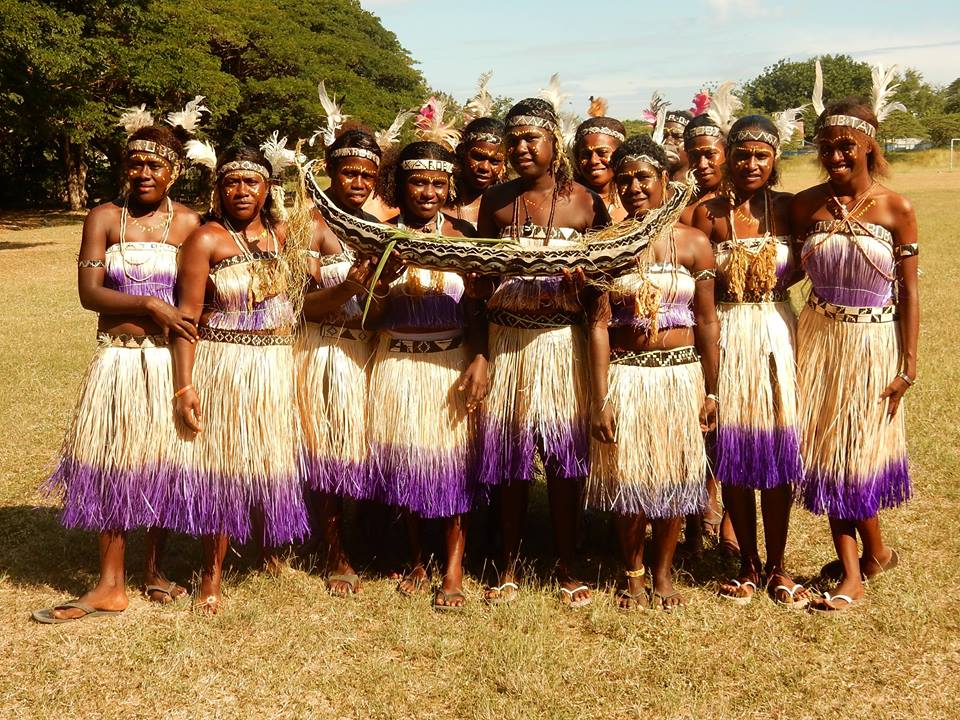 |
| The countdown to the 2014 Bougainville Mona Festival continues, only two more sleeps...We would love you to join us at the main boat stop in Buka on Thursday morning as we welcome Mona paddled through the Buka Passage to open the show! The welcoming of the Mona will be followed by a parade and the festival opening ceremony at Bel Isi Park. |
But when you see them face to face and take a look with your natural camera, your eyes, you’ll call them ‘black beauties’. A beauty of nature’s own design.
Bougainvilleans are sometimes nicknamed kawas, so when love songs about Bougainvillean girls are sung by PNG musicians, instead of saying, ‘Bougainville babe girl’ they say, “kawas babe girl”, an expression that is popular throughout the country.
Bougainvilleans are sometimes nicknamed kawas, so when love songs about Bougainvillean girls are sung by PNG musicians, instead of saying, ‘Bougainville babe girl’ they say, “kawas babe girl”, an expression that is popular throughout the country.
Actually the meaning of the word kawas is not really known in Buka. Some say it means friendly, beautiful, cute and wonderful but Bougainvilleans may have a different definition.
Some say kawas is from the Manus language which may mean a traditional trading partner. We don’t know how it came to be the usual Manus name for Bougainvilleans although many have ended up in Manus since the 1930s.
It’s a term implying close relationships and friendships between peoples of Manus and Bougainville.
 |
| Mona Festival, Buka. |
Being seen as black is unique and beautiful, just like the white, yellow, brown and light skinned people. If you don’t believe this, don’t hesitate to go to Bougainville and see for yourself how beautiful a kawas is and enjoy the festivals of their culture.
Mona Festival is held in Buka town and there is also the Hantoa Cultural Show, the Tinputz Cocoa Festival, the Siwai Cultural Show and many more.
Joyce Bagi from Central admits that she loves black. “What is your favourite colour? “Black.”
Why? “Because the two most special people in my life are black, my mom and my boyfriend.
“Yeah, no doubt black is beautiful!”
 |
| That night was awesome Mona Festival Fundraiser. Tatok bamboo band and all, the mortlock knife dancers and buka hits all night long. |
The Buka show ground will be the main host for the festivals.
The Mona Festival is a yearly event therefore the chairman, Lawrence Belleh is appealing to the people to fully support and learn from it.
The festival is promoting culture and with that it can attract a lot of tourists to the province.
This cultural festival will also encourage the people to hold fast to their culture and traditions.
The festival is promoting culture and with that it can attract a lot of tourists to the province.
This cultural festival will also encourage the people to hold fast to their culture and traditions.
 |
| Mona Festival, Buka. |
Therefore, cultural activities such as singsing kaur groups, bamboo bands and Solomon dances will be an integral part of the festival every year to attract participation from all around the autonomous region.
ABG’s chief eecutive officer for Commerce, Albert Kinani has yet to confirm the dates for Mona Festival for 2019.
Groups from Halia, Hahalis, Gogohe and from Malasang are regulars at the festivals which are yet to be confirmed for participation at the show.
 |
| Mona Festival is on again this year...28th to 30th August on Buka Island. The festival is held annually since 2009. The festival is about recognizing the significance of the canoe (Mona) in the North Bougainville traditional society. The canoe is traditionally built with three unique designs to indicate its purposes of transport (voyage), fishing (food gathering) and fighting (warrior). |
Kinani is appealing to business houses and corporate sponsors for the 2019 festival.
The CEO also announced recently the opening of a new website to promote tourism in the Autonomous Region of Bougainville: www.bougainvilletourism.org.pg
The ABG recognises the largely untapped potential of tourism and is aware Bougainville has the natural attraction to lure adventure and niche’ travellers to its shores. But a lot needs to be done.
 |
| Kanage @ Buka(mona festival 2mas!!.)hiiiyeeh! |
Success does not come overnight. There are no short cuts and quick fixes for success in anything.
ABG’s financial resources and capacity which have to be shared with other areas and services seeking more urgent attention for tourism development in the region has not been easy.
Clearly, this creates a lot of room for private enterprise driven participation in an industry that can be both profitable and enjoyable with the right advice and approach and sense of ownership.

Bougainville’s natural beauty and attractions, including its vibrant culture, like the rest of the country, can be best showcased with serious and deliberate government involvement.
This is lacking now and can be attributed largely to a lack of resources, capacity and focus and the fact that since it was established the tourism office and responsibility has been moved from pillar to post.
This is lacking now and can be attributed largely to a lack of resources, capacity and focus and the fact that since it was established the tourism office and responsibility has been moved from pillar to post.
The settling in, focus, funding and seriousness have been amiss.
With so much potential staring at us in Bougainville it is time our political leaders and bureaucrats alike take the attitude that if tourism is to contribute to ABG’s coffers, then it should be well-intended.

A number of private operators that have been self-starters to promote tourism are the ones carrying the baton up front. The amount of promotion they are doing both out of joy in promoting the beauty of the Island and as a business is a good story.
For more information about the festival and the tour packages, contact via email: pngattractions@gmail.com
• Peter S Kinjap is a freelance writer and a blogger. He writes for The National newspaper,weekender edition, email: pekinjap@gmail.com
• Peter S Kinjap is a freelance writer and a blogger. He writes for The National newspaper,weekender edition, email: pekinjap@gmail.com


